How to Read Your Electric Bill
Learn what charges on your electric bill mean and how to read your monthly statement.
Your electric bill is made up of several parts — each reflecting the cost of purchasing electricity and delivering it safely and reliably to homes and businesses in our community.
What the Charges on Your Bill Mean
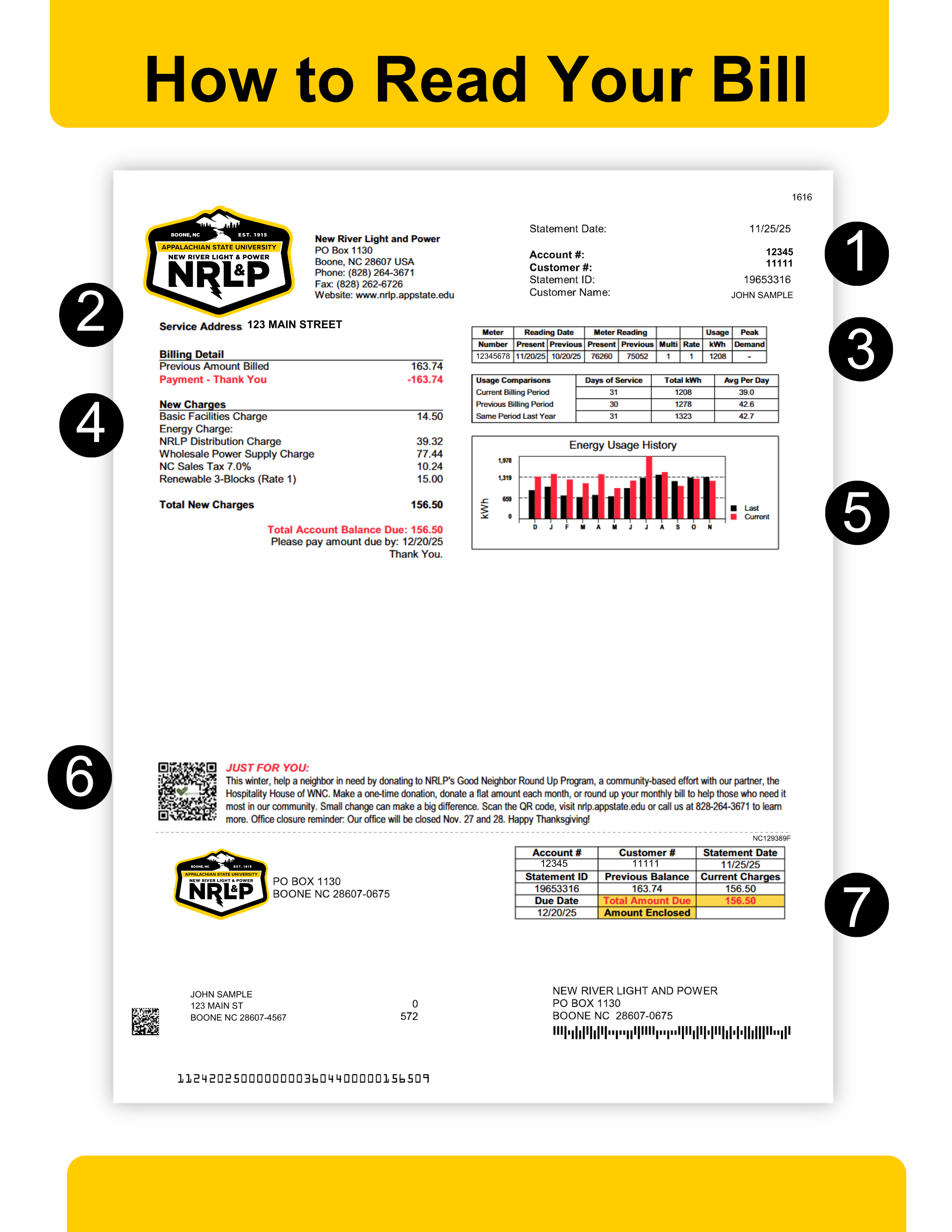
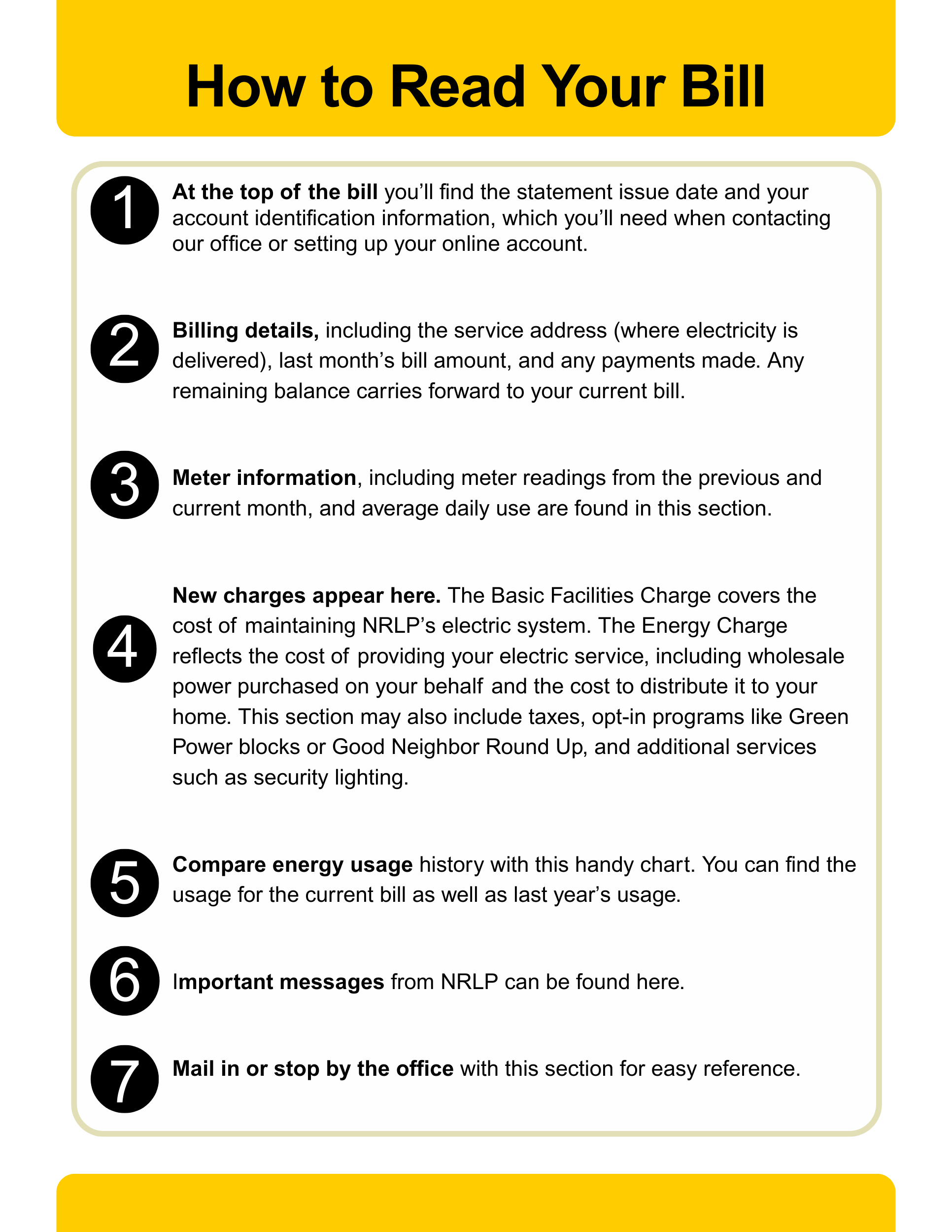
Whether you receive a traditional monthly bill or are a prepaid service customer, your electric bill is made up of several different factors. When you sign up for service, you’ll receive customer and account numbers, which you’ll use to sign up for the Customer Portal and when you call our customer service team.
Monthly bills break down your charges by line item, keeping you in the know when it comes to your bill. You’ll also see a usage comparison chart to help you track your electricity use over time.
Basic Facilities Charge
A fixed monthly charge that helps cover the cost of maintaining the electric system — including meters, poles, wires, substations, billing and customer service — regardless of how much electricity you use.
Distribution Charge
Covers the cost of delivering electricity through NRLP’s local electric system to homes and businesses. The Distribution Charge makes up the first portion of the Energy Charge and is measured in kilowatt-hours (kWh).
Wholesale Power Supply Charge
This is a pass-through cost that reflects the electricity NRLP purchases on behalf of customers. This charge is measured in kilowatt-hours (kWh) and includes the Purchased Power Adjustment (PPA) that is typically updated once a year in March. The Wholesale Power Supply Charge is the other portion of the Energy Charge.
Demand Charge
Optional Programs
Net Billing Rider Solar Customers
Why Your Bill Can Change
Your electric bill can change due to a variety of factors. Seasonal weather and storms, high-demand usage times and market conditions all play a role. In addition, rate adjustments — like updates to the Purchased Power Adjustment or changes to base rates — may occur. These updates help ensure NRLP can continue delivering reliable service. Learn more about why your bill changes.
Electric Bill Frequently Asked Questions
What does “pass-through cost” mean?
A pass-through cost means NRLP charges customers the same price it pays for wholesale electricity. NRLP does not add profit to this cost.
When is my bill due?
Your due date is printed below the total amount due on your statement. Not all customers have the same due date as NRLP has four billing cycles. If you need more time or assistance with your bill, please contact our customer service team.
What is a billing cycle?
Your electricity bill is based on the previous month’s meter reading. A billing cycle is a roughly 30-day period that makes up your monthly bill. If you receive a bill on February 25, for example, the meter readings will be from January 20 to February 20, with a due date of March 22. We understand this can get confusing, so be sure to ask our customer service team any questions you might have.
How can I get financial assistance?
We understand that financial hardships occur. There are resources available in our community, including the Low Income Energy Assistance Program and the WeCAN Crisis Assistance Program. Additionally, our team is always here to help. Reach out by calling 828-264-3671 or email nrlp-csr@appstate.edu

Learn more about our billing options & initiatives!
Do you want to…
- see the latest retail rate schedule?
- say goodbye to monthly bills? Consider our Prepaid Service.
- generate your own electricity? Visit the customer-owned generation page.
- round up for a good cause? Learn about the NRLP Good Neighbor Program.
- save energy and money? Explore the NRLP Resource Center!
We want to be your hometown energy partner — from providing savings tools to helping neighbors in need, we’re here when you need us.