To find information regarding the 2026 annual Purchased Power Adjustment update, please read this letter from NRLP General Manager Matt Makdad. Find the official utility letter and North Carolina Utilities Commission notice in the Customer Correspondence section of our website.
Understanding Your Electric Rates
Learn what affects your electric bill and why it can change over time.
Electric bills can change from month to month and year to year based on several factors, including how much electricity is used and the cost of providing electricity.
This page explains what drives those changes — from higher energy use due to temperatures, wholesale power costs and rate updates — so you can better understand why your bill may go up or down over time.
Need help understanding the charges on your bill? Visit How to Read Your Electric Bill.
What affects your electric bill?
Your electric bill is influenced by three main factors:
How Much Electricity You Use
The more electricity you use, the higher your bill. Things that can increase your usage:
- Hot or cold weather
- More time spent at home
- New appliances or electronics
- Faulty appliances like HVAC or water heaters
This is the part of your bill you have the most control over. Remember, Boone is a winter-peaking area, so your usage will always increase over the winter season.
Cost of Electricity
This is the cost of the electricity NRLP purchases on behalf of customers. The cost of wholesale energy fluctuates over time:
- Regional and global energy market conditions
- Fuel costs, demand and other factors
- Updated through the Purchased Power Adjustment (PPA) annually
NRLP passes the cost of the electricity purchased at wholesale rates and does not profit from this charge.
Cost to Deliver Electricity
This covers the cost of delivering power to your home or business. This cost includes:
- Maintaining poles, wires and substations
- System upgrades and reliability improvements
- Customer service, lineworkers, staff, trucks, equipment and daily operations
These costs are reflected in the base rates, including the Basic Facilities Charge and the Distribution Charge.
Key Takeaway:
Your total bill is based on how much electricity you use and the cost of both the electricity itself and delivering it to your home or business.
Why Your Bill May Change Even When Rates Don’t
Electric bills don’t always change because of rates. In most cases, the biggest factor is how much electricity is used. Electricity is one of the few things we use before we pay for it, so it can be hard to remember almost a month later that energy use was high during a cold snap.
Even if rates stay the same, your bill can increase if your energy use goes up.
Common reasons your usage may increase
- Extreme temperatures — heating and cooling systems use a lot of energy, and even more during extreme weather
- Changes in household size or activity
- New appliances or equipment
- Faulty appliances, such as a heating system stuck on auxiliary heat or a broken water heater element
- Unmaintained heating and cooling systems, including dirty air filters
- Seasonal changes in energy use
How to monitor and manage your energy use
- Track daily and monthly usage through the Customer Portal
- Compare usage trends on your monthly bill
- explore energy-saving tools and tips in the NRLP Resource Center
What is the Purchased Power Adjustment (PPA)?
Electricity prices can change throughout the year due to factors like fuel costs, weather and regional energy demand.
NRLP does not generate electricity. We purchase power on behalf of our customers and pass those wholesale costs through without markup or profit.
The Purchased Power Adjustment (PPA) is the process used to update the cost of wholesale electricity on customer bills, so it accurately reflects the actual price NRLP pays to purchase power.
To help keep bills stable throughout the year, NRLP estimates wholesale energy costs in advance. Each year, those estimates are reviewed and adjusted based on actual costs.
Why the PPA is Reviewed Each Year
The cost of wholesale electricity can change due to factors outside NRLP’s control, including:
-
Extreme heat or cold
-
Severe weather and storms
-
Regional energy demand
-
Fuel prices and energy market conditions
- Global event
Each March, NRLP:
-
Reviews the actual cost of wholesale energy from the prior year
-
Compares it to what was collected from customers
-
Updates the PPA to reflect the difference and project costs for the year ahead
If costs were higher than expected, the PPA may increase.
If costs were lower than expected, the PPA may decrease. This is reflected in the per kWh rate on your bill labeled Wholesale Power Supply Charge.
How this Process Helps Keep Rates Fair
The annual PPA review ensures:
-
Customers pay only what electricity actually costs
-
Any over- or under-collection is corrected
-
Rates remain fair and transparent over time
NRLP does not profit from the PPA. It is a direct pass-through of wholesale energy costs. The North Carolina Utilities Commission (NCUC) reviews and approves this annual adjustment.
Changes to Base Rates
Base rates support the cost of operating and maintaining NRLP’s electric system. Over time, NRLP may request a base rate adjustment through a formal review process with the North Carolina Utilities Commission (NCUC) called a Rate Case.
A Rate Case allows the NCUC to review and approve changes requested by NRLP. The NCUC ensures that the proposed rates are reasonable, necessary and in the public interest. NRLP cannot change base rates without Commission approval.
Customers are kept informed through the rate case process and are given opportunities to address concerns directly to approval authorities.
How Bills Have Changed Over Time
The North Carolina Utilities Commission evaluated changes relative to the base rates established in 2023. Annual wholesale power supply adjustments may cause year-to-year fluctuations. Below are comparisons of typical customers in each category, from residential to large businesses. Actual bills will vary depending on energy use, weather and business operations.
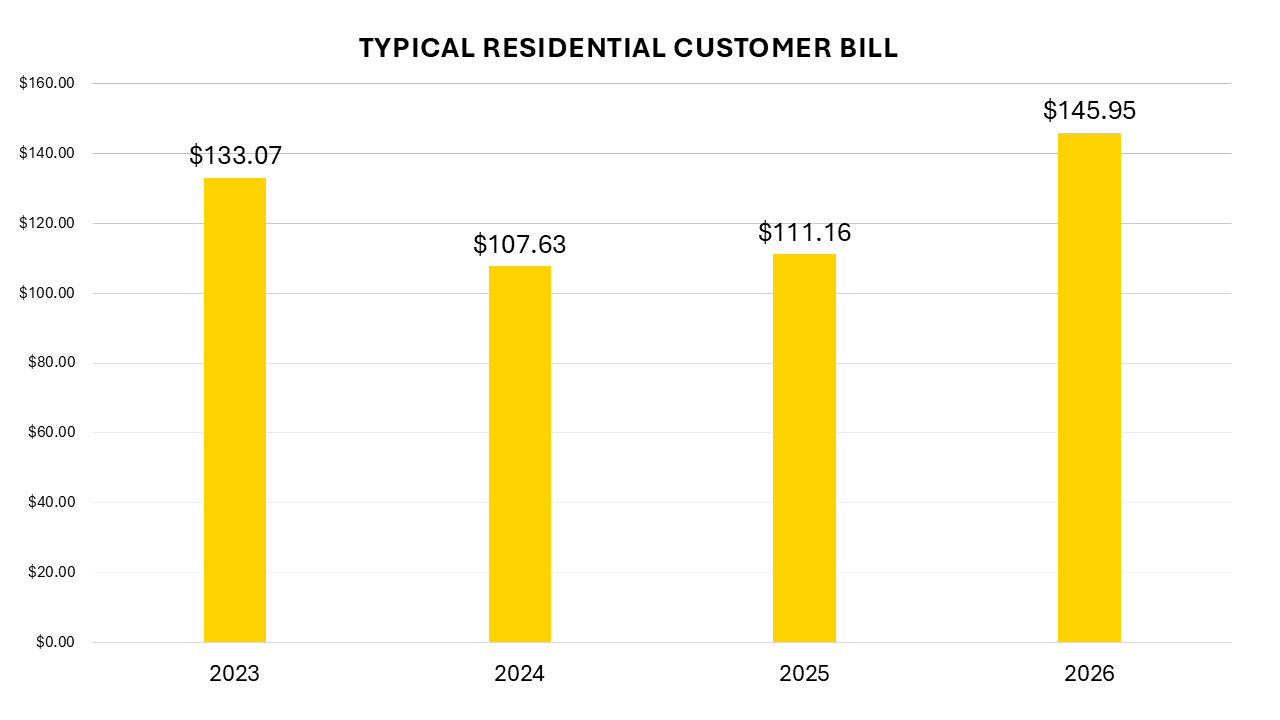
Residential Customer Bill Comparison
This graph shows a comparison of the estimated monthly bill for a typical residential household using 1,000 kWh per month from 2023 to 2026.
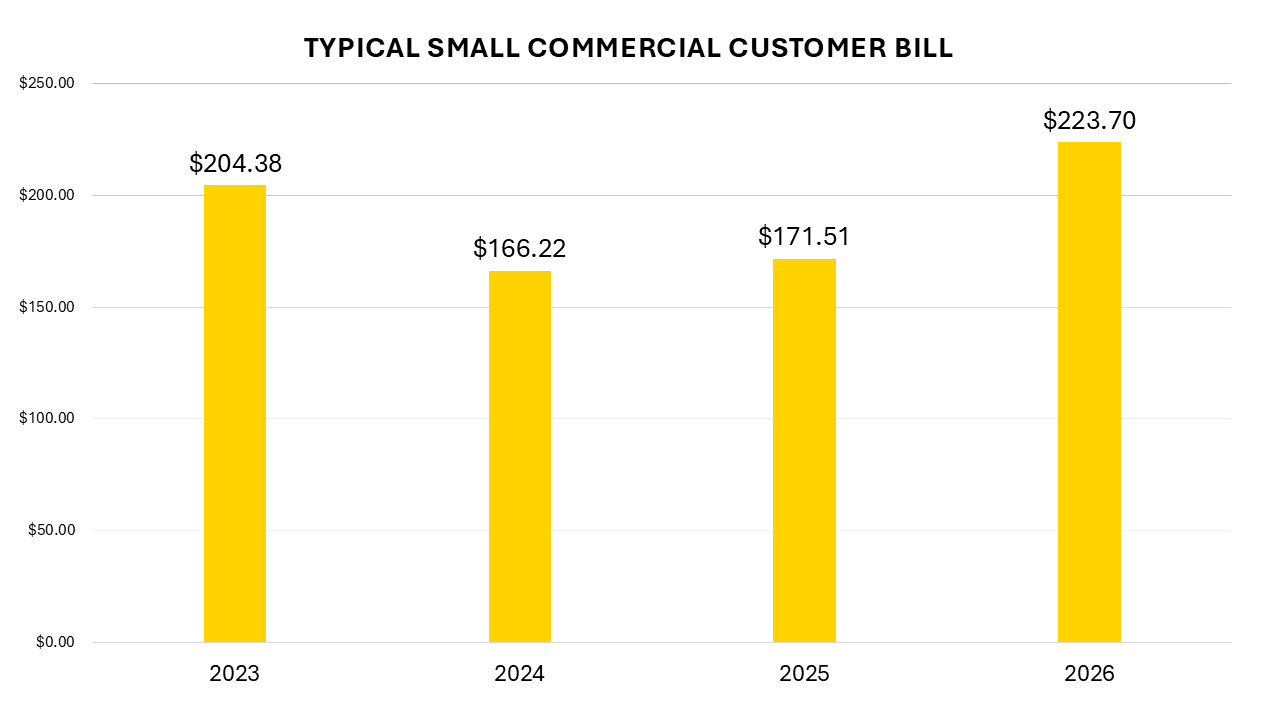
Small Commercial Bill Comparison
This comparison graph represents a typical small business with a usage of 1,500 kWh per month from 2023 to 2026.
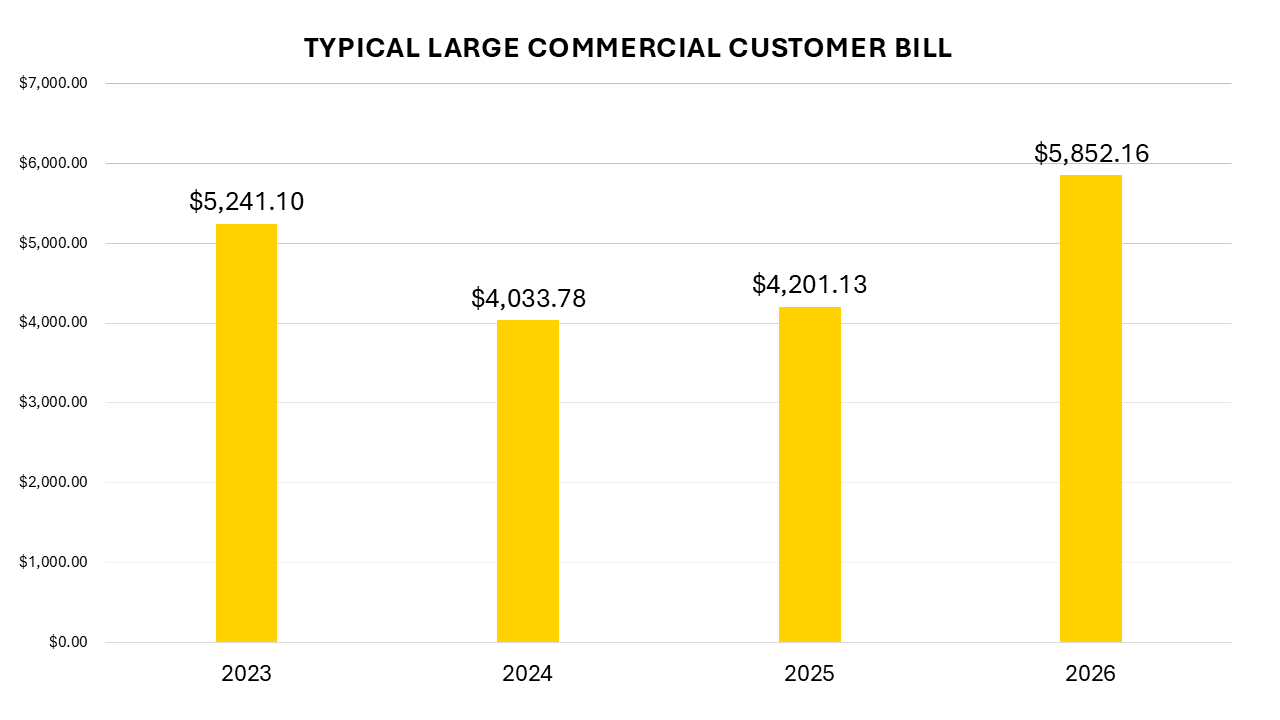
Large Commercial Customer Bill Comparison
The comparison graph above includes both energy usage of 1,000 kWh and demand charges of 10 KW, and is typical of a larger business customer. The bills are compared from 2023 to 2026.
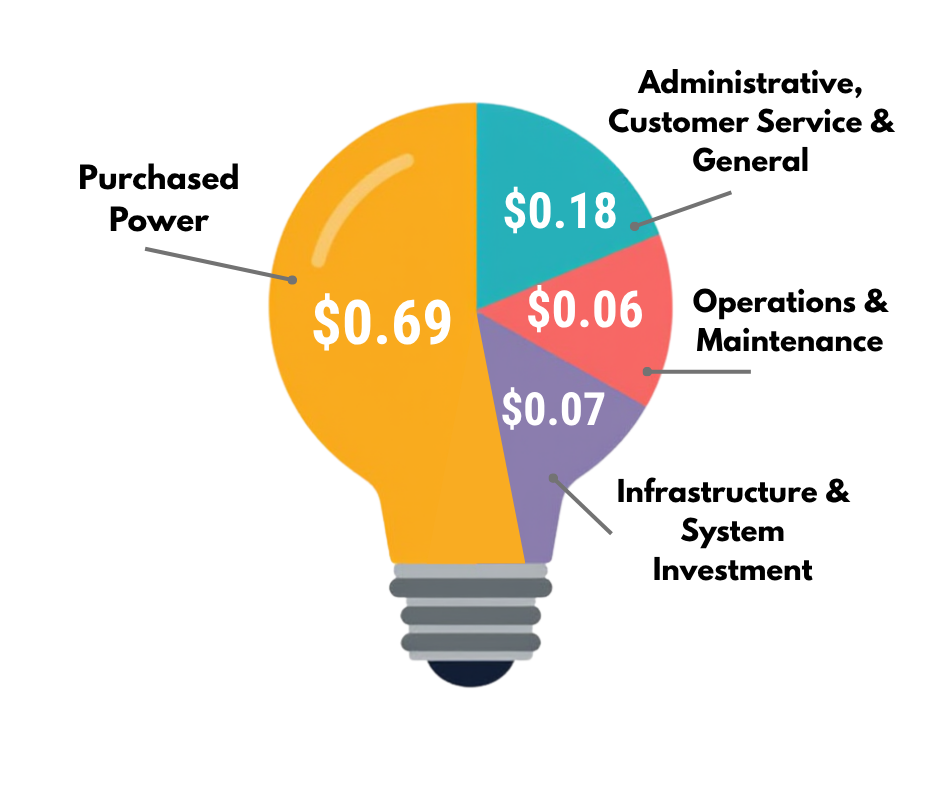
Where your electric dollar goes
We think it’s important for you to know where your money goes so you feel confident that every dollar spent goes right back into providing safe, reliable electricity. The pie chart on the left breaks down where your dollar is spent by percentage.
The largest portion of your dollar helps cover the cost of the power we purchase to provide electricity. When there is high demand, power costs more. That’s why when we all work together to conserve energy on high-demand days, we all save. This portion is what is adjusted annually through the Purchased Power Adjustment and varies from year to year.
The remainder of your dollar supports the cost to operate and maintain the local electric system. These costs are covered by base rates.
Electric Rates Frequently Asked Questions
What does “pass-through cost” mean?
A pass-through cost means NRLP charges customers the same price it pays for wholesale electricity. NRLP does not add profit to this cost.
Why doesn’t NRLP just absorb higher energy costs?
NRLP operates as a public power utility and must recover the actual cost of providing electricity to remain financially stable and reliable. The PPA ensures those costs are shared fairly and transparently.
Why are PPA updates reviewed in March?
March allows NRLP to review a full calendar year of actual energy costs and update projections for the year ahead. The review begins in January and the final PPA update is implemented in March.
Can the PPA ever go down?
Yes. If wholesale energy costs are lower than projected, the PPA may decrease.
What causes large changes in wholesale energy costs?
Extreme weather events, prolonged cold or heat, major storms, fuel prices, global events and regional demand can all affect wholesale energy costs.
Where can I see these charges on my bill?
The PPA is included in the Wholesale Power Supply Charge, which is measured in kilowatt-hours (kWh) on your monthly bill.
What is the difference between a PPA update and change to base rates?
PPA updates reflect changes in the cost of wholesale electricity that NRLP purchases on behalf of customers. PPA updates happen annually and are a part of ensuring NRLP recovers the correct amount for purchased wholesale energy. Base rate changes help cover the cost of operating and maintaining the grid, including poles, wires, substations, staff and system upgrades.