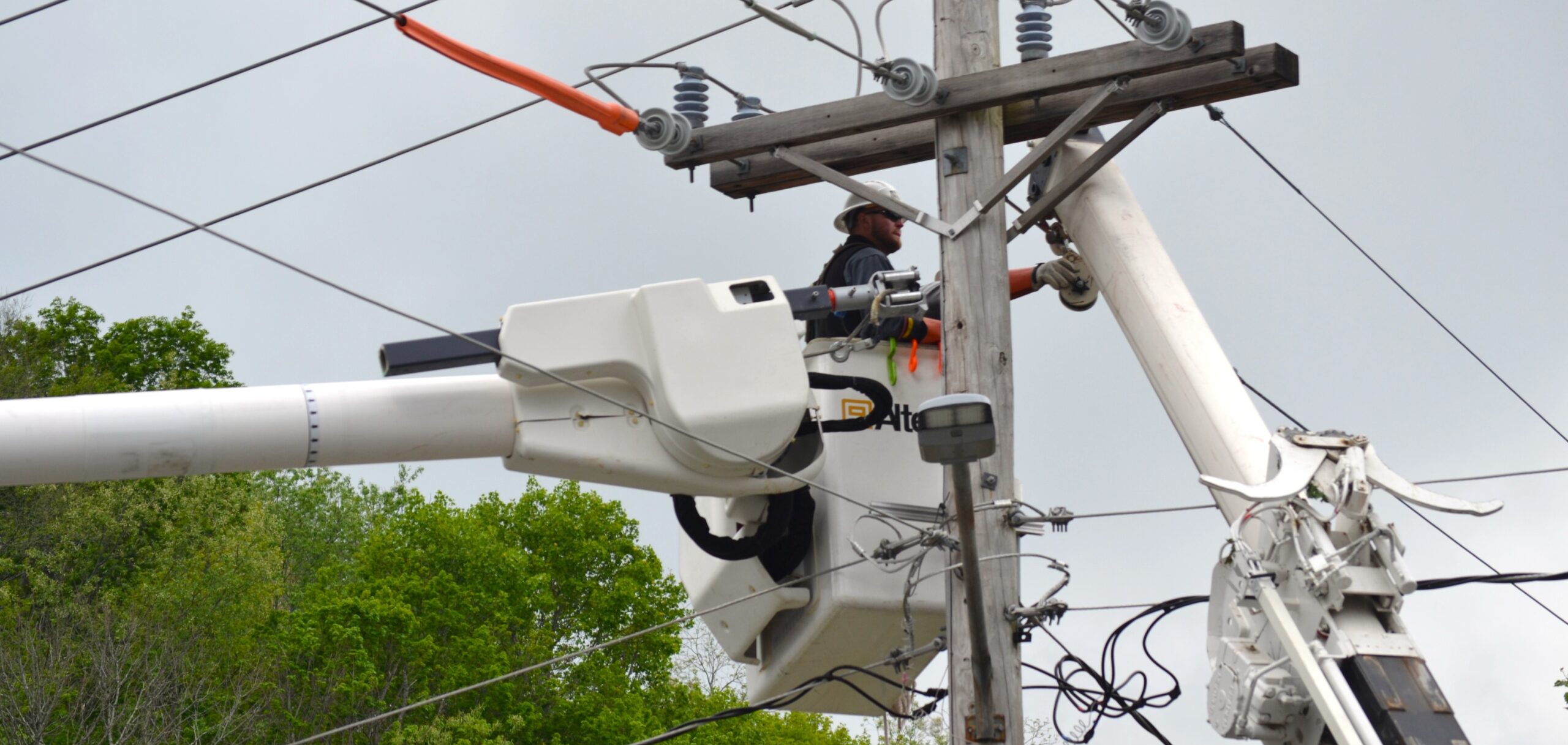
When most of us think about power outages, winter weather often comes to mind — especially in the High Country. But summer can be just as challenging for electric utilities.
From thunderstorms and lightning to tree limbs and even curious squirrels, several factors can affect the electric system during the warmer months. While many outages are brief, understanding what causes them can help explain why they happen and what New River Light & Power does to keep service reliable.
Trees and Vegetation
Trees are one of the most common causes of power outages across the country.
During the summer growing season, branches can come into contact with power lines, especially during windy conditions or thunderstorms. Even a small branch touching a line can create a fault that interrupts service.
To reduce these risks, NRLP conducts ongoing vegetation management and tree trimming throughout our service area. While no trimming program can eliminate every outage, maintaining safe clearances around power lines plays an important role in reliability. Customers can do their part by ensuring that the right vegetation is planted in the correct space with enough distance from power lines. Not sure where to start? Visit the NRLP Tree Trimming and Planting page to learn more.
Squirrels and Other Wildlife
It may sound surprising, but squirrels are among the leading causes of electric outages nationwide.
Squirrels, birds, snakes and other wildlife occasionally come into contact with electrical equipment such as transformers, switches and power lines. When that happens, protective devices on the electric system react to prevent equipment damage and larger outages.
In some cases, customers may experience a brief blink or momentary interruption. In others, an outage may occur while crews respond and make repairs.
Summer Storms and Lightning
Thunderstorms are common across the High Country during the summer months.
Lightning strikes can damage electric equipment directly or create disturbances on the electric system. Strong winds can bring tree limbs into power lines, while heavy rain can contribute to other equipment issues.
These weather-related events can cause anything from a brief power blink to a longer outage, depending on the extent of the damage.
Why Did My Lights Blink?
Not every interruption means something is broken.
The electric system includes protective devices that function similarly to circuit breakers. When a fault occurs — whether caused by a tree branch, squirrel, lightning strike or another issue — these devices are designed to quickly isolate the problem and protect the larger electric system.
As a result, customers may notice lights flicker or power briefly go out and come right back on. While these blinks can be inconvenient, they are often a sign that protective equipment is working exactly as intended. Learn more about blips and blinks.
Working to Maintain Reliability
NRLP crews respond whenever outages or system disturbances occur, whether the cause is vegetation, wildlife, weather or equipment issues. In addition to responding to outages, crews perform ongoing maintenance, system upgrades and vegetation management to help reduce the frequency and duration of interruptions. Using Advanced Metering Infrastructure and SCADA, our team can respond to outages as soon as they occur, and often diagnose a problem before it ever disrupts service.
Public power utilities are known for reliability, and NRLP consistently maintains reliability levels above 99.98 percent. While no electric system can completely prevent outages, our goal is to provide safe, reliable service and restore power as quickly as possible when interruptions occur.
If you experience an outage, remember that you can report it at any time by calling 828-264-3671. After-hours calls are forwarded to the App State Police Department for dispatching.
Stay Prepared This Summer
Summer weather can bring thunderstorms, power outages and periods of high electricity demand. While most outages are caused by local issues such as vegetation, wildlife, or severe weather, customers may also hear about Energy Emergency Alerts (EEAs) during periods of unusually high regional electricity demand.
NRLP encourages customers to be prepared for both unexpected outages and periods when voluntary energy conservation may be requested to help support grid reliability.